
ARTICLE I The Corporation
Section 1.01. Name and Organizational Structure.
Fuel The Future (hereinafter the “Corporation”) is a nonprofit corporation organized and existing under the Utah Revised Nonprofit Corporation Act in compliance with Title 16, Chapter 6a of the Utah Code Annotated.
Section 1.02. Tax Status and Purposes.
In accordance with the status of the Corporation as an organization described in Section 501(c)(3) of the Internal Revenue Code of 1986, as amended (or corresponding provisions of any future United States internal revenue law)(the “Code”), the Corporation is organized and shall be operated exclusively for the purposes set forth in the Articles of Incorporation.
ARTICLE II Directors
Section 2.01. Power and Authority of Directors.
Except as otherwise provided by law, the Articles of Incorporation or these Bylaws, all of the authority of the Corporation shall be exercised by the Board of Directors. The Directors serving hereunder shall have the power, authority and responsibilities of and shall perform the functions provided for Directors under the Utah Revised Nonprofit Corporation Act, including, but not limited to, the power to do the following:
- A. To appoint and control and at its pleasure remove any agents and employees and to allow such compensation for their services as the Board shall deem proper. This shall include the power to appoint investment advisors, trust companies, banks or other fiduciaries to invest and safeguard the assets of the Corporation;
- B. To prescribe, consistent with these Bylaws, the duties of any Officer;
- C. To determine and govern all matters affecting finances, discipline, committees or the function of the Corporation; and
- D. To conduct such acts as may be required to carry out the exempt purposes of the Corporation
Section 2.02. Provisions Relating to Directors.
- A. Number. The initial Board of Directors shall be comprised of those members set forth in the Articles of Incorporation. The number of Directors may be established by Board of Directors from time to time, but shall never be less than three (3) nor greater than nine (9).
- B. Term and Election. Each Director designated in the Articles of Incorporation shall be deemed to be elected as such as of the time of filing the Articles of
Incorporation to serve until his or her replacement is duly elected and qualified. The initial Board of Directors shall serve for a one (1) year term. Thereafter, all Directors shall serve for terms of one (1) year each or until his or her successor is duly elected and qualified. Directors may be
reelected.
The election of Directors shall be made at the annual meeting of the Board of Directors, or if action is not then taken, or if there is a vacancy, the election may be made at any regular or special meeting of the Board of Directors for which notice is given as provided in Section 2.04. The Directors elected as set forth herein shall be elected by the then serving Directors.- C. Resignation and Removal. Any Director, by notice in writing to the Board of Directors, may resign at any time. Except as otherwise provided in the Articles of Incorporation or these Bylaws, any Director may be removed from office with or without cause by a majority vote of the whole number of Directors.
- D. Cause Defined. The term cause shall mean any one of the following occurrences:
1. The conviction of a person of (or the pleading of nolo contendere to) a felony under the laws of the United States or any State thereof or any similar conviction under the laws of a foreign country;
2. The commission of an act of fraud, embezzlement, sexual harassment, dishonesty, theft or gross negligence which results in a material loss, damage or injury
to the Corporation; or
3. The commission of an act of moral turpitude which is materially injurious to the reputation of the Corporation.
Section 2.03. Quorum and Voting.
- A. Quorum. Except as otherwise provided in the Articles of Incorporation or these Bylaws, a majority of the Directors then in office shall constitute a quorum for the transaction of business at any meeting of the Directors.
- B. Voting. Except as otherwise provided in the Articles of Incorporation or these Bylaws, each Director then in office shall have one (1) vote, and the vote of a majority of the Directors present, whether in person, by mail or by proxy, at a meeting at which a quorum is present shall constitute the action of the Board of Directors.
Section 2.04. Notice of Meetings of Board of Directors.
Notice of the place, date and time of each meeting of the Board of Directors shall be given to each Director not more than thirty (30) days nor less than two (2) days before the date of such meeting. Any notice referred to in this Section 2.04 may be given by any reasonable means and need not specify the purposes of the meeting, except that if an amendment to the Articles of Incorporation or these Bylaws is proposed a copy of such proposed amendment shall accompany said notice, and except with respect to a proposed action to elect or remove a Director or Officer. Notice of any meeting shall be considered given if mailed, emailed, or otherwise sent or delivered to the Director at his or her physical or email address specified in the records of the Corporation. The giving of notice shall be deemed to be waived by any Director who shall attend and participate in such meeting, other than to protest the lack of proper notice at or prior to such meeting, and may be waived, in writing, by any Director either before, at or after such meeting. Such writing shall be filed with or entered upon the records of the meeting.
Section 2.05. Meetings of Directors.
- A. Regular Meetings. Regular meetings of the Directors, including the annual meeting, shall be at such place (within or without the State of Utah), date and time as may be fixed by the Board of Directors or by the President as authorized by the Board.
- B. Special Meetings. Special meetings of the Board of Directors may be called by the President or by two (2) Directors who deliver a written request to the Secretary for the calling of a meeting at least five (5) business days prior to the minimum notice period (as provided in Section 2.04) for the meeting to be called.
Section 2.06. Attendance and Participation at Meetings.
Directors may attend and participate in any meeting of the Board of Directors through any communications equipment if all persons participating can hear each other
Section 2.07. Action Without Meeting.
Any action which might be taken at any meeting of the Board of Directors may be taken without such meeting by a writing or writings signed by all of
the members of the Board. The writing or writings evidencing such action taken without a meeting shall be filed with the Secretary of the Corporation and inserted by him or her in the permanent records relating to meetings of the Board of Directors.
Section 2.08. Honorary Directors.
In addition to the above-described voting Directors, there may also be one or more Honorary Directors who shall be entitled to attend meetings of the
Board of Directors or other activities of the Corporation as determined by the Board of Directors. The Board of Directors shall provide for the selection and privileges thereof, provided that such persons shall not be entitled to vote, shall not be counted for quorum purposes or for purposes of determining
the number of Directors and the failure of such persons to receive notice of a meeting of the Board of Directors shall not affect the validity of a meeting.
ARTICLE III Committees
Section 3.01. Committees.
The Board of Directors may from time to time create committees of the Board consisting of not less than two (2) Directors and appoint the members thereof. The
Board also may appoint advisory committees consisting of Directors and/or persons who are not Directors provided that at least one (1) Director shall be a member of each such committee. The Board of Directors may prescribe or limit the powers and duties of any committee of the Board.
Section 3.02. Committee Limitations.
- A. Each committee shall serve at the pleasure of the Board of Directors, shall act only in the intervals between meetings of the Board or in making reports to the Board and shall be subject to the control and direction of the Board. Except as otherwise provided by law, the Articles of Incorporation or these Bylaws, each committee shall act by a majority vote of the whole number of its members.
- B. No committee shall have the authority to:
- (1) approve any action for which the approval of the Board of Directors is
- (2) establish committees of the Board of Directors or appoint members thereof; or
- (3) fill vacancies on the Board of Directors or any committee.
Section 3.03. Action Without Meeting.
Any action which might be taken at any meeting of any committee may be taken without such meeting by a writing or writings signed by all of the members of such committee. The writing or writings evidencing such action taken without a meeting shall be filed with the Chair of such committee and inserted by him or her in the permanent records relating to meetings of the committee.
ARTICLE IV Officers
Section 4.01. Election.
The Officers of the Corporation shall consist of a President, a Secretary, a Treasurer and such other Officers as the Directors may from time to time designate. Election of Officers shall take place at each annual meeting of the Board of Directors or, if action is not then taken or if there is a vacancy, at any regular or special meeting for which notice is given as provided in Section 2.04. The same individual may be elected to more than one (1) office. All Officers shall be elected by the Board of Directors by a majority vote for a one (1) year term.
Section 4.02. President.
The President shall preside at all meetings of the Board of Directors. The President shall, subject to the direction of the Board of Directors, have general
supervision, direction and control of the business and Officers of the Corporation. The President shall be an ex officio member of all standing committees. The President shall have the general powers and duties usually vested in the chief executive officer of a nonprofit corporation under the laws of the State of Utah and shall have such other powers and duties as may be prescribed by the Board of
Section 4.03. Vice-President.
The Board of Directors may, at a later date, create the office of Vice-President. The Vice-President shall in the absence or disability of the President, perform all
duties of the President, and, when so acting, shall have the powers and be subject to the restrictions on the President. The Vice-President shall have such other powers and shall perform such other duties as from time to time may be prescribed by the Board of Directors.
Section 4.04. Secretary.
The Secretary shall keep the minutes of the proceedings of the Board of Directors, shall be the custodian of all books, records, papers and property of the Corporation and shall perform such other administrative duties as shall be necessary or desirable to carry out the purposes of the Corporation. He or she shall have such other duties as may be established by the President with the consent of the Board of Directors
Section 4.05. Treasurer.
The Treasurer shall be the chief financial officer of the Corporation and shall perform such other administrative duties as shall be necessary or desirable to carry out the purposes of the Corporation. He or she shall have such other duties as may be established by the President with the consent of the Board of Directors.
ARTICLE V Indemnification and Insurance
Section 5.01. Indemnification of Directors and Officers.
The Corporation shall, to the maximum extent permitted by law, indemnify each of its Directors and Officers against expenses, judgments, fines, settlements and other amounts actually and reasonably incurred in connection with any proceeding arising by reason of the fact that any such person is or was a Director or Officer of the Corporation and shall advance to such Director or Officer expenses incurred in defending any such proceeding to the maximum extent permitted by law.
Section 5.02. Indemnification of Other Agents.
The Board of Directors of the Corporation may, in its discretion, provide by resolution for indemnification of any other agents of the Corporation comparable to that provided for Directors and Officers under Section 5.01, to the extent permitted by law.
ARTICLE VI Miscellaneous
Section 6.01. Fiscal Year.
The fiscal year of the Corporation shall end on the last day of December, or on such other date as may be fixed from time to time by the Board of Directors.
Section 6.02. Amendments.
Unless otherwise provided in the Articles of Incorporation or these Bylaws, the Bylaws may be amended at a meeting called for that purpose by the affirmative
vote of two-thirds (2/3) of the whole number of Directors; provided, however, that any such amendments shall be consistent with the Corporation’s status as a tax-exempt organization under Code Section 501(c)(3).
Section 6.03. Books and Records.
The Corporation must keep correct and complete books and records of account; and records of the proceedings of its Board of Directors.
CONFLICT OF INTEREST POLICY OF FUEL THE FUTURE
ARTICLE I Purpose
The purpose of the conflict of interest policy is to protect Fuel The Future’s (the “Corporation”) interest when it is contemplating entering into a transaction or arrangement that might benefit the private interest of an officer or director of the Corporation or might result in a possible excess benefit transaction. This policy is intended to supplement but not replace any applicable state and federal laws governing conflict of interest applicable to nonprofit and charitable organizations.
ARTICLE II Definitions
Section 2.1. Interested Person.
Any director, principal officer, or member of a committee with governing board delegated powers, who has a direct or indirect financial interest, as defined below, is an interested person.
Section 2.2. Financial Interest.
A person has a financial interest if the person has, directly or indirectly, through business, investment, or family:
- A. An ownership or investment interest in any entity with which the Corporation has a transaction or arrangement;
- B. A compensation arrangement with the Corporation or with any entity or individual with which the Corporation has a transaction or arrangement; or
- C. A potential ownership or investment interest in, or compensation arrangement with, any entity or individual with which the Corporation is negotiating a transaction or arrangement.
Compensation includes direct and indirect remuneration as well as gifts or favors that are not insubstantial. A financial interest is not necessarily a conflict of interest. Under Article III, Section 3.2, a person who has a financial interest may have a conflict of interest only if the appropriate governing board or committee decides that a conflict of interest exists.
ARTICLE III Procedures
Section 3.1. Duty to Disclose.
In connection with any actual or possible conflict of interest, an interested person must disclose the existence of the financial interest and be given the opportunity to disclose all material facts to the directors and members of committees with governing board delegated powers considering the proposed transaction or arrangement.
Section 3.2. Determining Whether a Conflict of Interest Exists.
After disclosure of the financial interest and all material facts, and after any discussion with the interested person, he/she shall leave the governing board or committee meeting while the determination of a conflict of interest is discussed and voted upon. The remaining board or committee members shall decide if
a conflict of interest exists.
Section 3.3. Procedures for Addressing the Conflict of Interest.
- A. An interested person may make a presentation at the governing board or committee meeting, but after the presentation, he/she shall leave the meeting during the discussion of, and the vote on, the transaction or arrangement involving the possible conflict of interest.
- B. The chairperson of the governing board or committee shall, if appropriate, appoint a disinterested person or committee to investigate alternatives to the proposed transaction or arrangement.
- C. After exercising due diligence, the governing board or committee shall determine whether the Corporation can obtain with reasonable efforts a more advantageous transaction or arrangement from a person or entity that would not give rise to a conflict of interest.
- D. If a more advantageous transaction or arrangement is not reasonably possible under circumstances not producing a conflict of interest, the governing board or committee shall determine by a majority vote of the disinterested directors whether the transaction or arrangement is in the Corporation’s best interest, for its own benefit, and whether it is fair and reasonable. In conformity with the above determination it shall make its decision as to whether to enter into the transaction or arrangement.
Section 3.4. Violations of the Conflicts of Interest Policy.
- A. If the governing board or committee has reasonable cause to believe a member has failed to disclose actual or possible conflicts of interest, it shall inform the member of the basis for such belief and afford the member an opportunity to explain the alleged failure to disclose.
- B. If, after hearing the member’s response and after making further investigation as warranted by the circumstances, the governing board or committee determines the member has failed to disclose an actual or possible conflict of interest, it shall take appropriate disciplinary and corrective action.
ARTICLE IV Records of Proceedings
The minutes of the governing board and all committees with board delegated powers shall contain:
- A. The names of the persons who disclosed or otherwise were found to have a financial interest in connection with an actual or possible conflict of interest, the nature of the financial interest, any action taken to determine whether a conflict of interest was present, and the governing board’s or committee’s decision as to whether a conflict of interest in fact existed.
- B. The names of the persons who were present for discussions and votes relating to the transaction or arrangement, the content of the discussion, including any alternatives to the proposed transaction or arrangement, and a record of any votes taken in connection with the proceedings.
ARTICLE V Compensation
A voting member of the governing board who receives compensation, directly or indirectly, from the Corporation for services is precluded from voting on matters pertaining to that member’s compensation. A voting member of any committee whose jurisdiction includes compensation matters and who receives compensation, directly or indirectly, from the Corporation for services is precluded from voting on matters pertaining to that member’s compensation. No voting member of the governing board or any committee whose jurisdiction includes compensation matters and who receives compensation, directly or indirectly, from the Corporation, either individually or collectively, is prohibited from providing information to any committee regarding compensation.
ARTICLE VI Annual Statements
Each director, principal officer and member of a committee with governing board delegated powers shall annually sign a statement substantially in the form of the attached Exhibit A which affirms that such person:
- A. Has received a copy of the conflicts of interest policy,
- B. Has read and understands the policy,
- C. Has agreed to comply with the policy, and
- D. Understands the Corporation is charitable and in order to maintain its federal tax exemption it must engage primarily in activities which accomplish one or more of its tax-exempt purposes.
ARTICLE VII Periodic Reviews
To ensure the Corporation operates in a manner consistent with charitable purposes and does not engage in activities that could jeopardize its tax-exempt status, periodic reviews shall be conducted. The periodic reviews shall, at a minimum, include the following subjects:
- A. Whether compensation arrangements and benefits are reasonable, based on competent survey information, and the result of arm’s length bargaining
- B. Whether partnerships, joint ventures, and arrangements with management organizations conform to the Corporation’s written policies, are properly recorded, reflect reasonable investment or payments for goods and services, further charitable purposes and do not result in inurement, impermissible private benefit or in an excess benefit transaction.
ARTICLE VIII Use of Outside Experts
When conducting the periodic reviews as provided for in Article VII, the Corporation may, but need not, use outside advisors. If outside experts are used, their use shall not relieve the governing board of its responsibility for ensuring periodic reviews are conducted.
ELECTRONIC RECORD AND SIGNATURE DISCLOSURE
From time to time, Holland and Hart LLP (we, us or Company) may be required by law to provide to you certain written notices or disclosures. Described below are the terms and conditions for providing to you such notices and disclosures electronically through your DocuSign, Inc. (DocuSign) Express user account. Please read the information below carefully and thoroughly, and if you can access this information electronically to your satisfaction and agree to these terms and conditions, please confirm your agreement by clicking the ‘I agree’ button at the bottom of this document.
Getting paper copies
At any time, you may request from us a paper copy of any record provided or made available electronically to you by us. For such copies, as long as you are an authorized user of the DocuSign system you will have the ability to download and print any documents we send to you through your DocuSign user account for a limited period of time (usually 30 days) after such documents are first sent to you. After such time, if you wish for us to send you paper copies of any such documents from our office to you, you will be charged a $0.00 per-page fee. You may request delivery of such paper copies from us by following the procedure described below.
Withdrawing your consent
If you decide to receive notices and disclosures from us electronically, you may at any time change your mind and tell us that thereafter you want to receive required notices and disclosures only in paper format. How you must inform us of your decision to receive future notices and disclosure in paper format and withdraw your consent to receive notices and disclosures electronically is described below.
Consequences of changing your mind
If you elect to receive required notices and disclosures only in paper format, it will slow the speed at which we can complete certain steps in transactions with you and delivering services to you because we will need first to send the required notices or disclosures to you in paper format, and then wait until we receive back from you your acknowledgment of your receipt of such paper notices or disclosures. To indicate to us that you are changing your mind, you must withdraw your consent using the DocuSign ‘Withdraw Consent’ form on the signing page of your DocuSign account. This will indicate to us that you have withdrawn your consent to receive required notices and disclosures electronically from us and you will no longer be able to use your DocuSign Express user account to receive required notices and consents electronically from us or to sign electronically documents from us.
All notices and disclosures will be sent to you electronically
Unless you tell us otherwise in accordance with the procedures described herein, we will provide electronically to you through your DocuSign user account all required notices, disclosures, authorizations, acknowledgements, and other documents that are required to be provided or made available to you during the course of our relationship with you. To reduce the chance of you inadvertently not receiving any notice or disclosure, we prefer to provide all of the required notices and disclosures to you by the same method and to the same address that you have given us. Thus, you can receive all the disclosures and notices electronically or in paper format through the paper mail delivery system. If you do not agree with this process, please let us know as described below. Please also see the paragraph immediately above that describes the consequences of your electing not to receive delivery of the notices and disclosures electronically from us.How to contact Holland and Hart LLP:
You may contact us to let us know of your changes as to how we may contact you electronically, to request paper copies of certain information from us, and to withdraw your prior consent to receive notices and disclosures electronically as follows: To contact us by email send messages to: ejohnson@hollandhart.com
To advise Holland and Hart LLP of your new e-mail address
To let us know of a change in your e-mail address where we should send notices and disclosures electronically to you, you must send an email message to us at ejohnson@hollandhart.com and in the body of such request you must state: your previous e-mail address, your new e-mail address.
We do not require any other information from you to change your email address. In addition, you must notify DocuSign, Inc to arrange for your new email address to be reflected in your DocuSign account by following the process for changing e-mail in DocuSign.
To request paper copies from Holland and Hart LLP
To request delivery from us of paper copies of the notices and disclosures previously provided by us to you electronically, you must send us an e-mail to ejohnson@hollandhart.com and in the body of such request you must state your e-mail address, full name, US Postal address, and telephone number. We will bill you for any fees at that time, if any.
To withdraw your consent with Holland and Hart LLP
To inform us that you no longer want to receive future notices and disclosures in electronic format you may:
- i. decline to sign a document from within your DocuSign account, and on the subsequent page, select the check-box indicating you wish to withdraw your consent, or you may;
- ii. send us an e-mail to ejohnson@hollandhart.com and in the body of such request you must state your e-mail, full name, IS Postal Address, telephone number, and account number. We do not need any other information from you to withdraw consent.. The consequences of your withdrawing consent for online documents will be that transactions may take a longer time to process..
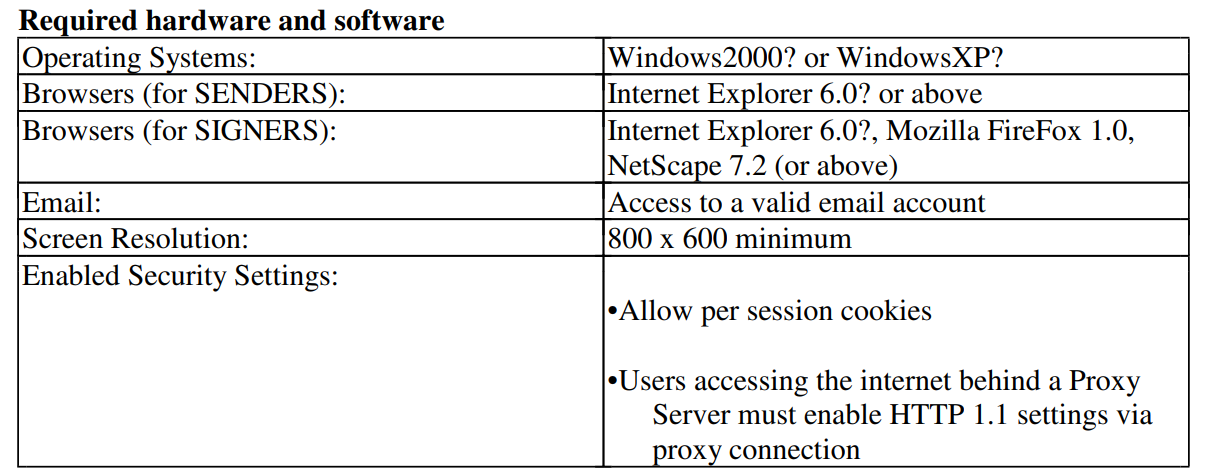
** These minimum requirements are subject to change. If these requirements change, we will
provide you with an email message at the email address we have on file for you at that time
providing you with the revised hardware and software requirements, at which time you will
have the right to withdraw your consent.
Acknowledging your access and consent to receive materials electronically
To confirm to us that you can access this information electronically, which will be similar to other electronic notices and disclosures that we will provide to you, please verify that you were able to read this electronic disclosure and that you also were able to print on paper or electronically save this page for your future reference and access or that you were able to e-mail this disclosure and consent to an address where you will be able to print on paper or save it for your future reference and access. Further, if you consent to receiving notices and disclosures exclusively in electronic format on the terms and conditions described above,
please let us know by clicking the ‘I agree’ button below.
By checking the ‘I Agree’ box, I confirm that:
- I can access and read this Electronic CONSENT TO ELECTRONIC RECEIPT OF ELECTRONIC RECORD AND SIGNATURE DISCLOSURES document; and
- I can print on paper the disclosure or save or send the disclosure to a place where I can print it, for future reference and access; and
- Until or unless I notify Holland and Hart LLP as described above, I consent to receive from exclusively through electronic means all notices, disclosures, authorizations, acknowledgements, and other documents that are required to be provided or made available to me by Holland and Hart LLP during the course of my relationship with you.